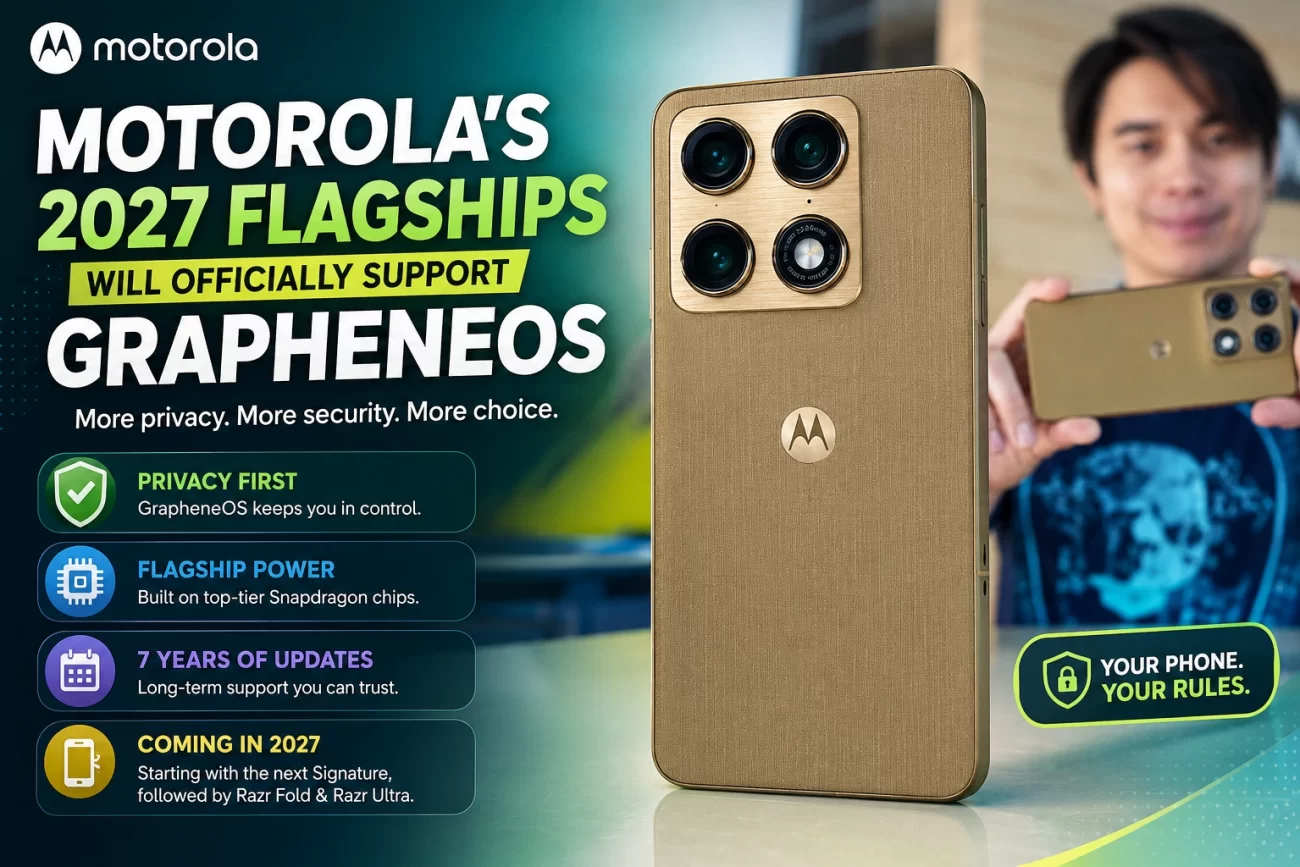
Motorola is preparing a major software shift for its 2027 flagship smartphones, with official GrapheneOS support planned for a new generation of devices. The partnership could give users an unusual choice: keep Motorola’s standard Android experience or install a privacy-focused operating system later.
Motorola GrapheneOS Support: Key Highlights
- GrapheneOS support is coming to Motorola’s 2027 flagship phones.
- Motorola’s phones will ship with the company’s regular Android software.
- Users will be able to switch to GrapheneOS later.
- Support will begin with a traditional, non-folding flagship.
- The device is expected to be the successor to the Motorola Signature.
- The next-generation Razr Fold and Razr Ultra are also expected to receive support.
- The supported models will use flagship Snapdragon processors.
- GrapheneOS requirements include long-term software support, with seven years of proper updates.
- Motorola is reportedly handling a significant part of the GrapheneOS porting work.
Motorola and GrapheneOS Partnership Explained
GrapheneOS is a privacy- and security-focused operating system based on Android. Unlike standard Android builds that are closely integrated with Google services, GrapheneOS is designed to give users greater control over privacy and the software environment.
The upcoming Motorola devices will not ship with GrapheneOS as their default operating system.
Instead, Motorola will sell the phones with its regular Android-based software. Owners who want a more privacy-focused setup will have the option to move to GrapheneOS after purchase.
That makes the development particularly interesting because official device support can remove many of the complications associated with installing alternative Android operating systems.
Which Motorola Phones Will Support GrapheneOS?
According to the information shared by GrapheneOS developers, support is planned for Motorola’s 2027 flagship lineup.
The expected rollout includes:
- A new standard Motorola flagship
- This will reportedly arrive first.
- It is expected to succeed the Motorola Signature.
- It will use a high-end Snapdragon platform.
- Next-generation Razr Fold
- Motorola’s foldable lineup is also expected to join the GrapheneOS-supported devices.
- Next-generation Razr Ultra
- The premium Razr model is also planned to receive support.
Motorola has not yet publicly revealed the complete specifications or commercial names of all these 2027 devices.
Why Snapdragon Chips Matter
One of the more interesting details is Motorola’s planned use of flagship Snapdragon chipsets in these devices.
GrapheneOS developers have indicated that high-end Snapdragon platforms offer advantages for security and performance because of their isolated hardware components and stronger processing capabilities.
For users, this could mean that future Motorola phones will combine:
- High-end CPU and GPU performance
- Modern hardware security features
- Better support for privacy-focused software
- Long-term software maintenance
- Official compatibility with GrapheneOS
This is particularly important because alternative Android operating systems depend heavily on proper hardware and software support from the device manufacturer.
Seven Years of Software Support
Another major part of the plan is long-term software support.
The upcoming Motorola devices intended for GrapheneOS support are expected to meet or exceed the project’s requirements, including seven years of proper updates.
That could make these phones considerably more attractive to users who plan to keep a device for many years.
Long software support also matters for security. A phone may have excellent hardware, but without regular security updates, its long-term value can decline quickly.
Motorola Will Help With the GrapheneOS Port
Perhaps the biggest development is Motorola’s reported involvement in bringing GrapheneOS to its hardware.
Rather than leaving the entire process to the GrapheneOS development team, Motorola itself is expected to handle a substantial portion of the porting work.
That could make official GrapheneOS support much more reliable than unofficial community-built ports.
It may also help GrapheneOS developers gain better access to the hardware-specific components required to maintain the operating system over several years.
What Is GrapheneOS?
For users unfamiliar with the platform, GrapheneOS is an Android-based operating system built with a strong emphasis on privacy and security.
Some of its notable characteristics include:
- A security-focused Android foundation
- Greater control over Google services
- Additional privacy protections
- Sandboxed Google Play options
- Stronger control over application permissions
- A focus on reducing unnecessary data access
- Support for standard Android applications
Importantly, GrapheneOS is still based on Android, so switching to it does not mean giving up the basic Android application ecosystem.
Will Motorola Phones Come With GrapheneOS Preinstalled?
No, not according to the current information.
The 2027 Motorola flagships are expected to launch with Motorola’s normal Android software.
GrapheneOS will instead be an alternative operating system that owners can install later on supported devices.
This approach gives buyers more flexibility. Users who prefer Motorola’s software can continue using it, while privacy-conscious owners can choose GrapheneOS.
Why This Could Be a Big Deal
Official GrapheneOS support for Motorola hardware could be significant for several reasons.
- More choice: Users can decide which software environment they want after purchasing the phone.
- Privacy: GrapheneOS provides additional privacy-oriented controls.
- Security: The project places a strong emphasis on device and application security.
- Long-term ownership: Seven years of proper updates could make the phones more suitable for extended use.
- Foldable support: Bringing GrapheneOS to future Razr models could expand privacy-focused Android options into the foldable market.
- Manufacturer cooperation: Motorola’s involvement could make ongoing support easier to maintain.
Motorola 2027 Flagships: Expected Software Support
| Feature | Expected Details |
|---|---|
| Default OS | Motorola’s Android software |
| GrapheneOS | Official support planned |
| Launch year | 2027 |
| First supported device | New non-folding Motorola flagship |
| Other expected models | Next-gen Razr Fold and Razr Ultra |
| Chipset | Flagship Snapdragon platform |
| Software support requirement | Seven years |
| Motorola involvement | Significant porting work |
| Focus | Privacy, security and long-term support |
What This Means for Buyers
For consumers, the biggest change is choice.
A Motorola flagship could effectively serve two different types of users. Someone who wants a conventional Android experience can use Motorola’s software as intended. Another buyer who prioritizes privacy can potentially switch to GrapheneOS without purchasing completely different hardware.
However, the exact installation process, supported configurations, warranty policies and regional availability will need to be confirmed when the devices officially launch.
vivo V70 Lite 4G Arrives With a Huge 8,100mAh Battery
Final Take
Motorola’s planned GrapheneOS support could become one of the most interesting software developments in the company’s 2027 flagship lineup. The combination of flagship Snapdragon hardware, seven years of software support and official GrapheneOS compatibility could appeal strongly to privacy-conscious Android users.
The biggest difference is that Motorola appears to be working directly with the GrapheneOS project rather than leaving support entirely to independent developers. If the plan reaches the market as described, future Motorola flagships could offer a rare combination of mainstream hardware and a genuine privacy-focused software alternative.
For now, the 2027 Motorola flagship successor to the Signature appears to be the starting point, with future Razr Fold and Razr Ultra models expected to follow.
2 thoughts on “Motorola 2027 Flagships Will Support GrapheneOS: What to Know”
Comments are closed.